

What Is The True Impact Of Las Vegas Luxury Migration On Market Value?
The direct impact of Las Vegas luxury migration on market value is a stabilization of the ultra-high-end sector, driven by a sustained influx of out-of-state capital that establishes higher baseline valuations for premium properties. When wealthy buyers from California, Washington, and New York relocate their primary residences and investment portfolios to Southern Nevada, they bring substantial equity that absorbs inventory in the uppermost pricing tiers. This capital migration effectively counterbalances the localized effects of normalizing mortgage rates, ensuring that demand for properties priced above $1.5 million remains steady. We are observing this demographic shift fundamentally rewrite the economic realities of the valley, as these inbound buyers prioritize architectural significance and immediate availability over incremental price negotiations.
Why Is Las Vegas Luxury Migration Accelerating In 2026?
The acceleration of Las Vegas luxury migration stems primarily from a calculated assessment of tax exposure and regional economic policies. High-net-worth individuals residing in coastal markets face increasingly aggressive taxation structures, compelling their financial advisors to recommend zero-income-tax states as primary domiciles. Nevada offers a compelling fiscal sanctuary, devoid of state income, franchise, and inheritance taxes, which immediately increases the effective yield on corporate salaries and capital gains. By relocating their primary operations to the valley, affluent professionals can redirect capital that would normally be lost to state taxes into tangible real estate assets. This financial maneuvering represents a highly sophisticated wealth preservation strategy rather than a simple lifestyle upgrade.
Beyond the obvious tax advantages, the relative value proposition of Southern Nevada real estate remains highly attractive when compared to major metropolitan coastal centers. Buyers exiting markets like Los Angeles or Seattle routinely find that their purchasing power doubles or triples within the Las Vegas Valley. A luxury estate that commands $10 million in Silicon Valley can easily be replicated in size, quality, and community amenities for a fraction of that cost in our local high-end neighborhoods. This disparity in price per square foot allows migrating executives to upgrade their standard of living while simultaneously liquidating excess equity for other investments. For comprehensive guidance on executing this transition smoothly, our team has compiled insights within a detailed relocation overview for high-net-worth individuals.
How Does Inbound Capital Influence Inventory And Absorption Rates?
Analyzing the intersection of out-of-state wealth and local housing metrics reveals a distinct bifurcation in our inventory data. In the broader residential market, we are seeing a normalization phase characterized by climbing inventory and extended days on market. However, the ultra-luxury tier tells a different story, as targeted inbound wealth continues to systematically absorb premium, turnkey estates located behind guarded gates. Our localized absorption rate data indicates that newly constructed or flawlessly renovated properties in prime locations are moving off the market at a pace that defies broader macroeconomic cooling trends.
The current months of inventory metric for homes priced over $3 million illustrates how tightly constrained the most desirable housing segments remain. While conventional wisdom suggests rising inventory should apply downward pressure on pricing, the continuous arrival of affluent buyers creates a localized scarcity of truly exceptional homes. These out-of-state purchasers are often operating with strict timelines driven by tax deadlines or corporate relocations, meaning they cannot afford to wait for a hypothetical market bottom. Consequently, they are willing to meet sellers at their listing prices provided the property requires no immediate capital improvements or extensive renovations. To understand the granular mathematics behind these market dynamics, we encourage investors to review our analysis of recent pricing structures and inventory trends.
Which Enclaves Benefit Most From This Demographic Shift?
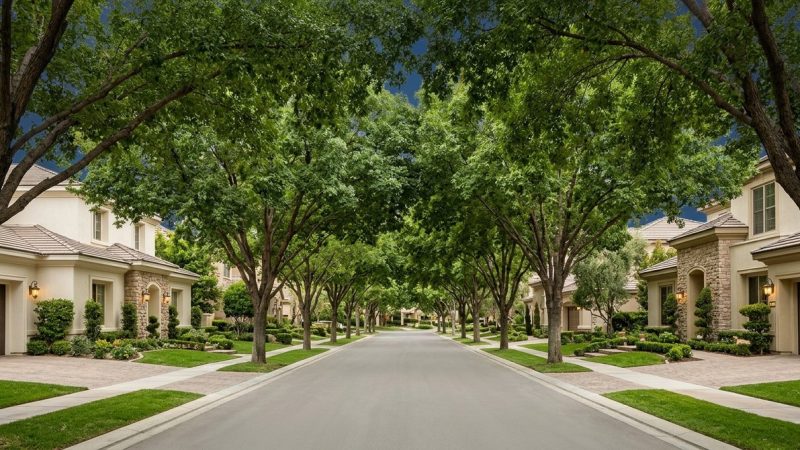
The influx of coastal wealth is highly concentrated within a select group of master-planned communities that offer uncompromising security and world-class amenities. Enclaves such as The Ridges in Summerlin and MacDonald Highlands in Henderson have emerged as the premier destinations for this migrating capital. These specific neighborhoods provide the stringent guard-gated access, private golf club affiliations, and sweeping topographical views that affluent buyers demand. The architectural standards enforced within these communities ensure long-term value retention, which appeals directly to buyers looking to park substantial equity in a secure asset.
As these buyers tour the valley, their preferences are actively reshaping the hierarchy of luxury developments. We see consistent demand for elevated lots that offer unobstructed sightlines of the iconic Strip, transforming hillside customs into the most fiercely contested properties on the market. Communities that anticipated this demand by integrating advanced infrastructure, such as fiber-optic networks and private wellness centers, are capturing the lion’s share of inbound real estate investment. For an insider perspective on how these premier neighborhoods compare, buyers frequently reference our comparative breakdown of local guard-gated living options.
What Structural Demands Are Reshaping Property Development?
The requirements of the modern high-net-worth migrant have evolved significantly since the previous real estate cycle. We are witnessing a fundamental shift away from vast, echoing properties toward highly intentional, wellness-focused contemporary architecture. Today’s inbound executive expects properties equipped with commercial-grade home offices, dual primary suites, and sophisticated indoor-outdoor integration that maximizes the desert climate. Builders and sellers who recognize these changing structural demands are commanding significant premiums, as buyers will readily pay over market value for immediate utility.
Furthermore, the emphasis on privacy has escalated to unprecedented levels. Out-of-state buyers are increasingly prioritizing properties that offer complete visual isolation from neighboring parcels, driving up the valuation of cul-de-sac lots and estates backing up to protected conservation land. Secondary structures, such as detached casitas for multi-generational living or private staff, have transitioned from a luxury amenity to a mandatory requirement for many of our relocating clients. This evolution in buyer criteria forces sellers to reevaluate their property’s market positioning, focusing heavily on privacy features and specialized architectural elements during the marketing phase.
How Do Stabilized Mortgage Rates Factor Into Wealth Migration?
While the ultra-luxury market is famously insulated by a high volume of all-cash transactions, stabilized mortgage rates still play a pivotal role in the broader ecosystem. Many affluent buyers utilize sophisticated financing instruments, such as pledged asset lines or jumbo portfolio loans, to preserve their liquid capital for higher-yielding ventures. As interest rates find a stabilized equilibrium in 2026, wealth managers are confidently advising their clients to execute these leveraged purchases. This renewed confidence in the debt markets allows buyers to stretch their budgets further, amplifying their purchasing power and accelerating the absorption of properties in the $5 million to $10 million range. We consistently observe that predictable debt costs encourage more aggressive post-purchase renovation budgets.
The predictability of the current rate environment also aids sellers in timing their market exits. By removing the volatility that characterized previous years, both sides of the transaction table can negotiate with a clearer understanding of fundamental market values. We analyze this stabilization as a net positive for the Las Vegas market, as it encourages rational, data-driven transactions over speculative bidding wars. The resulting environment is characterized by steady, sustainable growth that protects the asset values of our clients over the long term.
How Do Institutional Investors React To This Market Shift?
Institutional presence in the luxury sector has historically been muted, but the sustained out-of-state migration pattern is beginning to alter this paradigm. We are observing family offices and private equity syndicates carefully analyzing the rental yields of ultra-premium properties situated within high-demand guard-gated borders. These entities recognize that affluent migrants occasionally prefer to lease a multi-million dollar estate for a year before committing to a permanent neighborhood selection. This transitional housing demand creates a lucrative micro-economy for investors who can supply fully furnished, architecturally significant homes to the luxury leasing market. Ultimately, this institutional interest introduces another layer of capital competition that further stabilizes baseline property values.
The ripple effect of this institutional involvement extends into the pre-construction and custom build sectors of the local market. Developers are increasingly partnering with private equity to fund speculative luxury builds, confident that the migratory pipeline from California and New York will provide end-users upon completion. This symbiotic relationship ensures a steady pipeline of modern inventory, which is absolutely critical for maintaining the region’s appeal to discerning coastal buyers. Our team consistently monitors these macro development trends, ensuring our high-net-worth clients receive early access to the most promising upcoming projects. For those considering integrating property development into their portfolio, our data-driven approach minimizes exposure while maximizing projected returns.
How Our Group Navigates The Normalizing Landscape
At the Batchelor/Hanna Group, we leverage over $1 billion in sales experience to engineer precise strategies that capitalize on these macroeconomic shifts. We understand that selling a premium property to an out-of-state buyer requires far more than local listing syndication. It demands a globally connected marketing apparatus and the ability to articulate complex market data to highly analytical purchasers and their financial representatives. By utilizing our proprietary database of over 300,000 contacts, we systematically match relocating executives with properties that meet their exact tax, lifestyle, and architectural requirements. This targeted matchmaking process drastically reduces days on market while protecting the seller’s initial valuation.
For buyers entering the Las Vegas Valley, our objective is to provide a seamless, authoritative guide through an increasingly complex acquisition landscape. We rely on hard data, such as hyper-local absorption rates and localized price-per-square-foot metrics, to ensure our clients never overextend their positions. Whether negotiating the acquisition of a turnkey estate in Ascaya or coordinating a multi-million dollar exchange into Summerlin, our collective expertise ensures our clients’ portfolios remain protected. To begin mapping out your strategic real estate transition, we invite you to explore the comprehensive resources available on our official brokerage platform.