
I was grabbing my morning coffee near Downtown Summerlin earlier this week, watching the early July heat already settling over the valley. It is that specific time of year when the mountains near Red Rock Canyon take on a baked, hazy look by 9:00 AM. I inevitably hear the conversations talking about their property values, and lately, everyone wants to know what is actually happening in the Las Vegas real estate market. National news outlets paint one picture, but the reality on the ground is always more nuanced. Having flipped dozens of homes across this valley and spent years walking properties from Green Valley to Providence, I prefer to look at the structural reality of our neighborhoods. Today, I want to break down exactly what I am seeing right now.
Table of Contents
Current Inventory and the Las Vegas Real Estate Market
When we talk about the Las Vegas real estate market, we are really talking about several distinct micro-markets operating simultaneously. The days of a uniform valley-wide trend are long gone. Here is how the inventory and pricing are shaking out across the major price bands.
The Starter Tier (Around $350K)
The entry-level segment of the Las Vegas real estate market remains incredibly tight. If a clean, structurally sound home hits the market in Northwest Las Vegas or older parts of Henderson for around $350,000, it does not sit long. First-time buyers are competing directly with investors who have cash on hand. From my background in flipping, I always advise buyers in this tier to look past cosmetic issues. A 1990s build with original oak cabinets is fine, provided the HVAC system is relatively new and the roof is intact. Those are the big-ticket items that will drain your savings during a Vegas summer.
The Mid-Market ($600K to $1mil)
This is where we see the most hesitation and the longest days on market within the Las Vegas real estate market. Buyers looking in the $600,000 to $1mil range are typically move-up buyers. They want better school zones in Summerlin or more square footage in Skye Canyon. However, because they are often selling a home with a low interest rate to buy a new one at a higher rate, they are incredibly picky. They expect turnkey perfection. If a home in this bracket needs a kitchen remodel or pool resurfacing, it will sit. Sellers in this tier need to understand that buyers are stretching their budgets to get here, and they do not have an extra $50,000 in cash for renovations.
The Luxury Sector ($1M and Above)
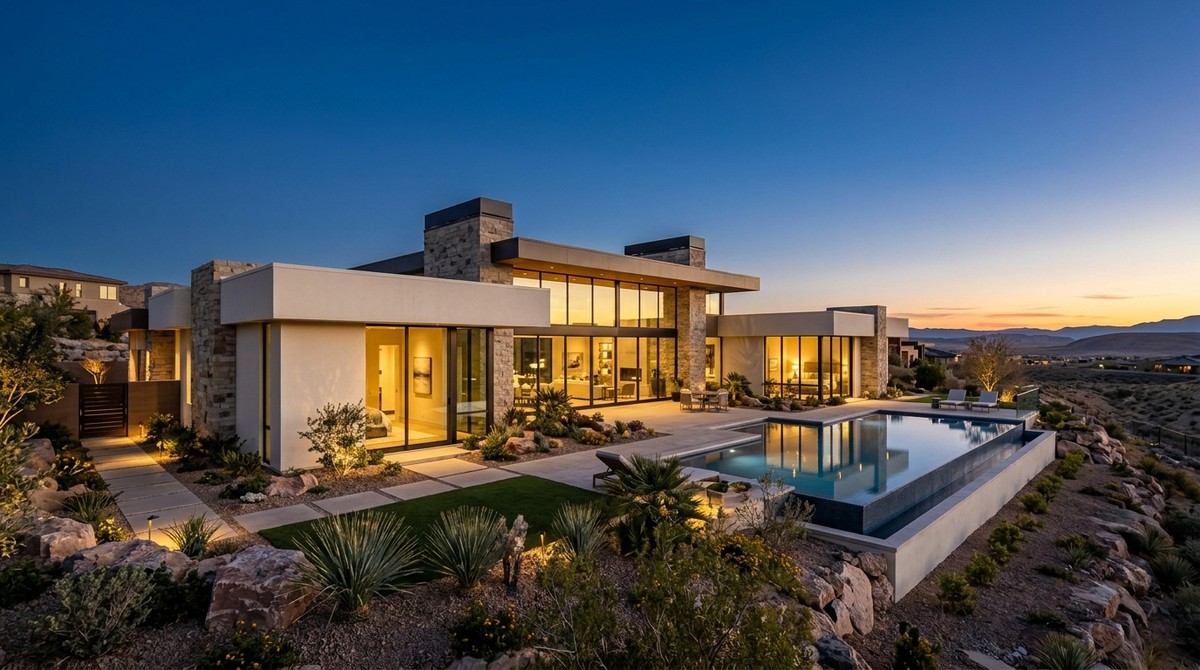
The luxury tier operates by its own set of rules. In guard-gated communities like The Ridges or MacDonald Highlands, cash remains a dominant force. Out-of-state buyers relocating for our tax-friendly environment continue to absorb premium inventory. When analyzing pricing, inventory, and absorption rates in this sector, the defining factor is always the view and the architecture. Desert contemporary homes with seamless indoor-outdoor living spaces are moving quickly, while the heavy, dark Tuscan builds from the mid-2000s are requiring significant price reductions to attract interest.
How Interest Rates Are Shaping Buyer Behavior
Interest rates are the invisible hand guiding the Las Vegas real estate market right now. We are seeing a pronounced lock-in effect. Homeowners who secured historically low rates a few years ago are choosing to stay put and remodel rather than list their homes. This artificially restricts our inventory, especially in established neighborhoods like Spanish Trails and Green Valley.
For buyers, the cost of borrowing means that every square foot has to justify its price tag. I am seeing a lot of clients prioritize functional layouts over sheer size. A well-designed 2,500-square-foot single-story home in Summerlin is often more desirable than a sprawling 4,000-square-foot two-story home that costs a fortune to cool in August. This shift in preference is something I always discuss when evaluating luxury homes from a structural perspective. Buyers are looking at the long-term carrying costs, including energy efficiency and HOA fees, much more closely than they did three years ago.
What is Selling Fast Versus Sitting on the Market
If you want to know the true health of the Las Vegas real estate market, look at the contrast between what goes under contract in a weekend and what lingers for months.
Homes that sell fast share a few common traits. First, they are priced correctly from day one. Aspirational pricing is dead. Second, they have updated mechanical systems. When I walk a property with a client, one of the first things I check is the HVAC system. A buyer facing a 115-degree July afternoon will not compromise on a failing AC (or one that looks like it will fail anytime). Third, homes with modern, neutral finishes in highly sought-after areas are moving. We are seeing strong demand for highly desirable luxury communities in Summerlin where the lifestyle amenities are already established.
Furthermore, the condition of the backyard is paramount. A pristine pool with updated plaster and modern equipment is a massive selling point. Buyers do not want to spend their first summer in a new house dealing with pool contractors and permits. I will also add that a nice, clean front yard landscape (curb appeal) is HIGHLY important as well… Buyers make up their minds whether a home is right for them before they open their car door to see the home! I have seen endless property flippers put 100’s of thousands of dollars into the interior of a new flip and just do a quick clean up of the existing front landscape. MAJOR FAIL! You must pay attention to the curb appeal of the home.
Conversely, homes that sit on the market usually suffer from deferred maintenance or outdated floor plans. A property in Southern Highlands with chopped-up, compartmentalized rooms will struggle against a newer open-concept build in Inspirada. Sellers who refuse to address peeling exterior paint, cloudy pool water, or worn carpets are finding that buyers will simply walk away. The market has normalized, and buyers have the leverage to demand quality.
Seasonal Rhythms in the Valley
Las Vegas has a very distinct seasonal rhythm that out-of-state buyers rarely understand until they live here. Right now, in the dead of summer, the Las Vegas real estate market naturally slows down. Moving in July or August is a grueling experience. Families are on vacation, and nobody wants to spend their weekends touring open houses when the pavement is radiating heat.
However, this summer lull presents a unique opportunity. The buyers who are active right now are serious, and the sellers who are listed right now usually need to move. I often find that August is a great time to negotiate favorable terms. Sellers are making deals and BIG ones!
Once we get past Labor Day and the temperatures drop into the 80s, the market wakes up. Fall is our second spring. The weather is perfect for property tours, and we see a surge of inventory hitting the market. This momentum carries through until December, when a different type of buyer emerges. The end of the year brings high-net-worth individuals looking to close on luxury living options in Henderson and Summerlin for tax strategy purposes before the calendar turns. These are often cash buyers executing 1031 exchanges or relocating their primary residence to Nevada to benefit from our lack of state income tax. They move decisively, which creates a sharp spike in luxury closings right as the year closes out.
Frequently Asked Questions About the Las Vegas Real Estate Market
To wrap things up, I want to address a few of the most common questions I get from clients when we are driving through neighborhoods or sitting down to review comps in the Las Vegas real estate market.
Is summer a good time to buy a home in Las Vegas?
Yes, it can be an excellent time to buy. While the inventory in the Las Vegas real estate market might be slightly lower than in the spring, the competition is also reduced. Sellers who list in July and August are typically highly motivated. If you can brave the heat to tour properties, you often have more negotiating power than you would during the busy fall season.
How long are homes currently sitting on the market?
It depends entirely on the location, price point and condition. Location is key, as it always is in real estate… Any home located in Summerlin that is priced right, even if it needs a little work, is going to get more eye balls. A turnkey starter home might be under contract in under ten days. However, a mid-market home that needs cosmetic updates could sit for forty-five to sixty days. In the luxury sector, days on market can stretch longer simply because the buyer pool is smaller, but properly priced contemporary homes are still moving efficiently.
Are guard-gated communities worth the premium?
In my experience, yes. Beyond the obvious security benefits, guard-gated communities in Las Vegas hold their value exceptionally well during market shifts. They offer a level of privacy and exclusivity that high-net-worth buyers consistently demand. When you buy into a community like Ascaya or Seven Hills, you are investing in a protected micro-market that often outperforms the broader valley.